

After hemorrhoid surgery, gentle cleaning may matter more than a strong spray. A bidet for hemorrhoids can rinse away residue with less friction than wiping, which may help limit irritation, but it isn’t a cure. Research has not established bidet washing as a hemorrhoid treatment.
It makes sense to look for a way to clean without aggravating tender or swollen skin. Warm water and comfortable, low pressure are the priorities. A forceful stream or rubbing dry can add discomfort rather than help.
This guide reviews what research suggests about bidets and hemorrhoid irritation, how to wash and dry gently, and what to consider with non-electric options. It also covers care after surgery: one study comparing warm-water sprays with sitz baths found no significant difference in wound healing or recovery time, although spray users reported greater satisfaction and convenience. Follow your surgeon’s aftercare instructions as you recover.
Key Takeaways
- Research doesn’t establish bidets as a way to prevent or treat hemorrhoids, so think of them as a hygiene option rather than a medical remedy.
- Some non-electric seats and attachments can connect to a nearby bathroom sink hot-water line for a warm rinse.
- Use a gentle stream, avoid irritating wipes, and pat the area dry instead of rubbing.
- After surgery, follow your surgeon’s care instructions when deciding whether and how to use a bidet.
- Compare bidet seats, bidet toilets, and bidet toilet combinations to find an option that suits your bathroom and daily needs.
Can Bidets Help With Hemorrhoids?
A bidet for hemorrhoids may make cleaning gentler by rinsing away residue with water instead of repeated wiping. This can reduce friction against irritated tissue, but a bidet is not a cure or a proven way to prevent hemorrhoids. A systematic review found no strong evidence either supporting or discouraging bidet use for perianal disease.
Research findings are mixed. In a Japanese one-year follow-up study of 7,637 bidet users and non-users, habitual use wasn’t significantly associated with incident hemorrhoids. The adjusted incidence odds ratio was 1.013. A separate study of healthy volunteers found low- or medium-pressure warm water reduced anal-canal pressure. That finding describes a possible comfort effect, not a demonstrated treatment for hemorrhoids.
Unlike toilet paper, a warm rinse cleans without dragging dry paper across tender skin. Use a small amount of toilet paper afterward to pat the area dry, without rubbing. Water may reduce toilet paper use, but you still need to dry gently and keep the toilet seat and nozzle clean.
Wet wipes aren’t necessarily gentler. Alcohol or fragrance can irritate sensitive skin, so avoid wipes containing these ingredients around the anal or genital area. If you use a wipe, choose one without them and dab rather than scrub. A bidet stream is another option when wiping causes discomfort, but keep the pressure comfortable.
Straining can add pressure during bowel movements. A toilet stool may change your sitting posture: the described squatting angle is 35 degrees, compared with 90 degrees in a standard sitting position. This posture may make bowel movements easier for some people, but the stool doesn’t treat hemorrhoids. Fiber, hydration, and exercise are also lifestyle measures that may help reduce risk. The recommended daily fiber intake described for this purpose is 25 to 38 grams.
Besides a bidet, care may include warm sitz baths, adequate fluids, fiber-rich foods, and regular exercise. A sitz bath uses a basin of warm water to soak the area. For an inflamed hemorrhoid, warm water should feel comfortable, not hot. These measures focus on gentle hygiene and reducing straining, rather than relying on wiping alone.
Have a doctor evaluate symptoms that don’t improve after a week of home treatment. Internal hemorrhoids can bleed during bowel movements; external hemorrhoids may cause pain, itching, swelling, or bleeding. A clinician can assess symptoms that persist.
Non-electric bidet seats and warm-water attachments
Non-electric bidet seats and attachments provide a water rinse without electronic controls. Some models connect to a nearby bathroom sink’s hot-water line, so your plumbing setup determines whether warm water is available.
Water Pressure and Temperature Settings
Pressure is how strongly the water sprays; temperature is how warm the wash feels. For sensitive hemorrhoid symptoms, choose a gentle stream and comfortable warmth rather than a forceful spray or hot water.
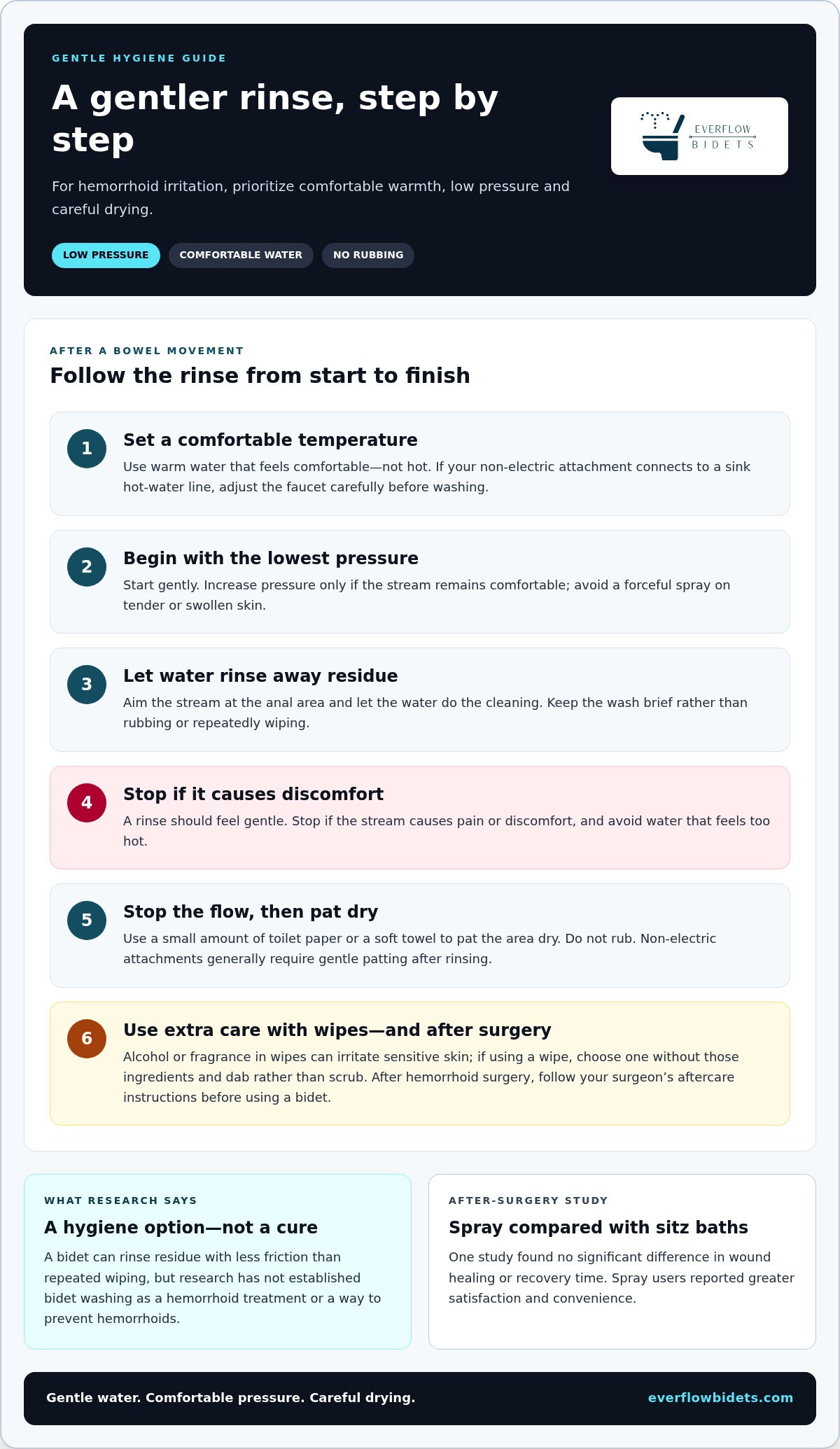
Non-electric designs don’t necessarily have electronic temperature controls. With a warm-water attachment connected to a sink line, the plumbing supplies the water. Adjust the faucet carefully before washing, start with low pressure, and increase it only while the stream remains comfortable. This keeps cleaning controlled rather than abrasive.
Warm Spray and Hemorrhoid Relief
A warm-water spray rinses the area without requiring repeated wiping. Warm water may soothe hemorrhoid-related itching and soreness, but a bidet doesn’t cure hemorrhoids or replace medical care.
A study comparing warm-water sprays with sitz baths after hemorrhoid surgery found no significant difference in wound healing or recovery time. Participants using sprays reported greater satisfaction and convenience. For everyday irritation, use a gentle stream at a comfortable temperature. Avoid water that feels too hot, especially when the skin is tender.
Bidet Attachment and Seat Costs
There is no single standard price for bidet attachments and seats in the United States. Costs depend on the design and features, including whether the setup connects to a nearby hot-water line or uses electronic functions.
Before choosing, compare what each option includes. An attachment adds a wash function to an existing toilet, while a bidet seat replaces the current seat. A warm-water connection may require access to the bathroom sink’s plumbing. Consider your toilet layout and preferred wash temperature when deciding which product and setup suit your bathroom.
Non-electric models avoid the electronic functions found in some bidet seats. That can suit anyone seeking a simple water rinse, but may mean fewer ways to control temperature or customize the wash. Compatible attachments can draw warm water from a nearby sink line; whether that works depends on the bathroom plumbing.
Drying is another point to compare. Some electronic bidet seats have warm-air drying, which can reduce the need to wipe after rinsing. Non-electric attachments generally require gentle patting with toilet tissue or a soft towel. Choose a method that dries the area without rubbing sensitive skin.
After a bowel movement, begin with low pressure and a comfortable water temperature. Stop if the stream causes pain or discomfort. If you’re recovering from surgery, follow your care instructions about methods and settings before adding a bidet wash to your routine.
Cleaning the anal area with hemorrhoids
A gentle rinse can clean the anal area with less friction against swollen tissue. Use warm water, a low-force stream, and careful drying to limit avoidable irritation.
Bidet Cleaning and Drying Practices
Start with comfortable water temperature and the lowest pressure setting. Aim the stream at the anal area and let water rinse away residue without forceful spraying. Keep the wash brief, then stop the flow before drying. A controlled rinse helps prevent a powerful stream from further irritating sensitive tissue.
After rinsing, gently pat the area dry with a soft towel or toilet tissue. Don’t rub, scrub, or drag paper across the skin. If your electronic bidet seat has a warm-air dryer, use it instead of wiping. Choose the method that leaves the area dry without discomfort.
Gentle Cleansing for Sensitive Skin
For sensitive skin, use plain warm water and avoid extra cleansing products around the anus. Moist wipes containing alcohol or fragrance can irritate the area, so they aren’t a gentle alternative to water. If you need toilet tissue, dab rather than wipe. The goal is to clean without rubbing or adding potentially irritating ingredients.
Notice how the stream feels during each wash. Lower the pressure or stop if rinsing causes pain or discomfort. Avoid water that feels too hot, as hemorrhoid-affected skin may already be tender. A warm bidet rinse may soothe itching or soreness, but it doesn’t cure hemorrhoids or replace medical treatment.
Keep the routine simple: rinse, stop the water, and pat dry. This reduces unnecessary contact with the area. Repeated wiping or prolonged spraying can both irritate skin if done roughly. A soft towel kept clean for personal use is another drying option.
Research comparing warm-water sprays with sitz baths after hemorrhoid surgery found no significant difference in wound healing or recovery time. Spray users reported greater satisfaction and convenience. These results concern postoperative care and do not show that every washing method suits everyone. Follow surgical aftercare instructions when relevant, and use gentle pressure for routine cleaning.
If toilet tissue is your only option, fold a soft piece and dab once, using a clean section if needed. Avoid scented or alcohol-based wipes. A bidet rinse can be an alternative when wiping causes discomfort, but careful pressure and drying still matter. If cleaning repeatedly aggravates symptoms, seek guidance from a healthcare professional.
How bidets may reduce irritation and friction
A water rinse can clean the anal area with less direct contact than repeated wiping. That difference matters when irritated skin makes ordinary bathroom hygiene uncomfortable.
Anal Irritation and Itching
Anal irritation means soreness or itching around the anus, where wiping friction can aggravate sensitive tissue. A gentle bidet rinse replaces some of that rubbing with water, which may make cleaning more comfortable.
Use a low-force stream and stop if it causes discomfort. Warm water may soothe itching or soreness, but a bidet doesn’t cure hemorrhoids or address the cause of ongoing symptoms.
Consider the whole cleaning routine, not just the rinse. Repeated wiping after washing, for example, brings back the friction you wanted to avoid. Rinse away residue, then pat dry rather than rub. If you still need toilet tissue, dab gently with a soft, clean piece.
Perianal Skin Irritation
Perianal skin irritation affects the skin around the anus, which can become uncomfortable after repeated rubbing or exposure to irritating products. Water offers an alternative to wiping, and gentle drying helps prevent further friction.
Avoid moist wipes containing alcohol or fragrance, as these ingredients can irritate sensitive skin. Rinse with plain water, and don’t scrub with a cloth or tissue. If irritation persists despite gentle hygiene, discuss the symptoms with a healthcare professional.
Pressure matters as much as the choice between water and paper. A forceful stream can add discomfort instead of making cleaning easier. Start with low pressure, aim only where needed, and stop when the area is clean. Don’t prolong the spray to compensate for pressure that feels too weak.
Clean equipment matters, too. One study reported that electronic bidet nozzles may become contaminated with bacteria. A field test in Japan found that self-cleaning nozzles using neutral electrolyzed water reduced the risk of bacterial contamination. These findings concern nozzle hygiene; they do not show that bidet use causes infections.
Follow the toilet seat’s nozzle-cleaning instructions and keep the fixture clean. If the nozzle has a self-cleaning function, use it as directed rather than touching the nozzle during routine washing. For other designs, follow the manufacturer’s cleaning directions. A clean nozzle and gentle stream support comfortable hygiene, but do not turn a rinse into hemorrhoid treatment.
Bidets after hemorrhoid surgery
After a hemorrhoid procedure, cleaning is only one part of recovery. The treatment type matters: hemorrhoidectomy involves surgery, while rubber band ligation and hemorrhoid artery embolization use different approaches and have different follow-up needs.
After rubber band ligation, the treated hemorrhoid falls off within a few days. Internal hemorrhoids treated with hemorrhoid artery embolization begin to shrink over several weeks. These timelines describe treatment effects, not when to start using a bidet. Follow the aftercare plan for your procedure.
Before using a bidet after surgery, review your discharge instructions for limits on washing, bathing, or pressure near the treated area. If they don’t address bidet use, ask your care team before adding it to your routine.
Watch for changes during recovery. New or worsening pain, bleeding, swelling, or itching should prompt a call to your healthcare professional, particularly if symptoms interfere with bowel movements.
Constipation and straining can make bathroom visits harder during recovery. Follow your medical team’s guidance on preventing constipation, including any recommendations about fluids, fiber, activity, or prescribed medicines. A bidet supports hygiene after a bowel movement, but it doesn’t address constipation or heal the surgical site.
Keep the bathroom routine simple. Don’t add cleansers or other products to the treated area unless your care instructions allow them. If a washing method causes pain, stop and ask your care team what to do next.
The practical takeaway: treat a bidet as an optional hygiene aid, not a recovery treatment. Your procedure, symptoms, and clinician’s directions determine whether and when it fits your postoperative care.
EverFlow Bidets: Bidet Toilets
EverFlow Bidets offers bidet toilets, bidet toilet seats, and bidet toilet combinations for a more convenient rinse after using the bathroom. These options suit different bathroom plans: a bidet toilet seat pairs with an existing toilet, while a bidet toilet or combination can be part of a larger fixture upgrade.
For hemorrhoid-related hygiene, focus on features that support gentle washing, such as comfortable water pressure and temperature controls. A bidet may offer a convenient way to rinse, but it does not replace guidance from a healthcare professional. After surgery, follow your healthcare professional’s aftercare instructions before changing your routine.
Explore the options at EverFlow Bidets, or visit everflowbidets.com with any questions.
Choose a Bathroom Routine That Feels Right
Decide what would make daily hygiene easier for you. Consider whether you prefer a simple rinse or adjustable washing and drying functions, and how those features fit your bathroom and routine. Choosing a bidet for hemorrhoids means finding a comfortable hygiene option, not replacing medical care or treatment.
If you’re recovering from surgery, keep your care team’s instructions central to any bathroom changes. For ongoing symptoms, seek medical guidance rather than relying on a fixture to resolve the cause. A thoughtful choice can support comfort and independence while fitting your needs at home.
EverFlow Bidets can help you explore options for your bathroom. Contact EverFlow Bidets for help choosing a bidet solution that suits your routine. Take the next step at your own pace, with comfort and informed choice leading the way.
Frequently Asked Questions
How do you clean your butt with hemorrhoids?
After a bowel movement, rinse gently and check that the area feels clean without further wiping. If residue remains, adjust your position before changing the stream strength. Keep personal towels separate from shared bathroom towels and wash them regularly. If cleaning causes new pain or bleeding, stop and seek medical advice rather than trying a stronger spray or different cleansing product.
What should you look for in a bidet?
Look for controls you can reach and understand, and a fit suited to your toilet and bathroom layout. A non-electric attachment that uses warm water needs access to a nearby sink hot-water line. Electronic seats need electricity to function. Consider whether you prefer a seat for an existing toilet or a complete fixture replacement, and review the cleaning instructions.
Can using a bidet help relieve hemorrhoid symptoms?
A bidet can make post-bowel-movement hygiene more comfortable for some people, but it shouldn’t be considered a hemorrhoid treatment. The distinction matters: rinsing addresses cleaning, while persistent symptoms need medical assessment. If discomfort continues, discuss symptom duration, bleeding, and bowel habits with a healthcare professional. Use the rinse as a personal hygiene choice, not as a substitute for recommended care.
Is a bidet safe to use with hemorrhoids or anal fissures?
For hemorrhoids, avoid any stream that causes pain or worsens irritation. An anal fissure is a separate condition, and this information cannot establish whether bidet washing is appropriate for it. Follow your clinician’s care instructions, especially after treatment, and ask before changing your cleaning routine. Don’t use the stream to test or treat a fissure.
What bidet water pressure and temperature are best for hemorrhoids?
Choose a gentle stream and water that feels comfortably warm, not hot. Controls differ, so no single setting suits everyone or every fixture. With a manual attachment, adjust the valve gradually and stop if the water feels uncomfortable. With adjustable seat settings, begin with the gentlest option and change only if the wash remains comfortable.
How should you use a bidet when you have hemorrhoids?
Use the bidet after a bowel movement as a personal cleaning aid, keeping the wash brief and directing it only at the area you need to rinse. Don’t press the nozzle or another object against the skin. In a shared bathroom, clean the seat and surrounding surfaces as part of ordinary upkeep. Follow your clinician’s directions during recovery from a procedure.
Can bidet use worsen hemorrhoids or cause irritation or infection?
A forceful stream or repeated, prolonged washing can irritate sensitive tissue. Keep the nozzle clean according to the fixture’s instructions, and don’t touch it to your body. Nozzle contamination and a person developing an infection are not the same finding; worsening pain or unusual discharge calls for medical guidance. Stop using the bidet if it aggravates discomfort.
Bidet versus toilet paper or sitz bath for hemorrhoid hygiene
A bidet provides a directed rinse, toilet paper absorbs moisture, and a sitz bath lets you soak the area in warm water. Each serves a different hygiene purpose, so the practical choice depends on your routine and any care instructions. Without a bidet, you can still use toilet tissue gently; a sitz bath requires a basin and space to use it.
Disclaimer
The information provided in the EverFlowBidets blog is for general informational and educational purposes only. While we strive to publish accurate, current, and well-researched content, nothing on this website should be considered medical advice, diagnosis, or treatment. Articles discussing the potential health, hygiene, accessibility, or environmental benefits of bidet use are based on publicly available research, manufacturer information, and other reputable sources. Individual results may vary, and any health-related decisions should be made in consultation with a qualified healthcare professional.